

Choosing a name is one of the most exciting parts of welcoming a new baby. Japanese names are beautiful and full of meaning. They often connect to nature, seasons, or positive qualities. Many parents today look for rare Japanese names that stand out.
Japanese naming traditions are rich and thoughtful. Each name usually has kanji characters with special meanings. Unique Japanese names can honor culture while being memorable. This guide shares 165+ rare and unique Japanese names with meanings to inspire you.
Unique Japanese Boy Names
- Aoto (青藤) – Blue wisteria, symbolizing calm strength and natural beauty
- Kaien (海遠) – Distant ocean, representing vast potential and adventure
- Rikuya (陸夜) – Land at night, evoking mystery and grounded wisdom
- Tsubasa (翼) – Wings, symbolizing freedom and aspiration
- Aokirō (青輝郎) – Blue radiance, representing clarity and brightness
- Naoji (直次) – Honest second son, embodying integrity and tradition
- Raito (来翔) – Coming light, symbolizing hope and new beginnings
- Rion (陸温) – Warmth of the land, representing comfort and stability
- Reiji (礼司) – Courteous ruler, embodying respect and leadership
- Takeru (健) – Strong and brave, a classic warrior name
- Akihiro (明広) – Bright and expansive, symbolizing openness and clarity
- Renzo (蓮蔵) – Lotus treasure, representing purity and value
- Hideo (英雄) – Excellent man or hero, embodying nobility
- Renjiro (蓮次郎) – Lotus second son, combining purity with tradition
- Akiya (秋夜) – Autumn night, evoking peaceful contemplation
- Ryusei (流星) – Shooting star, symbolizing wishes and wonder
- Shohei (翔平) – Flying peace, representing harmony and freedom
- Ryuto (龍翔) – Dragon soaring, embodying power and grace
- Shoma (昌真) – Prosperous truth, symbolizing honesty and success
- Fumio (文雄) – Literary hero, representing wisdom and strength
- Isamu (勇) – Courage, a bold and straightforward name
- Tetsuya (鉄也) – Iron strength, embodying resilience
- Eiji (永次) – Eternal second, symbolizing lasting presence
- Junpei (純平) – Pure peace, representing innocence and calm
- Rento (蓮翔) – Lotus flight, combining purity with aspiration
- Arata (新) – Fresh and new, symbolizing renewal
- Tomoya (智也) – Wise and intelligent, embodying knowledge
- Yuuto (悠翔) – Gentle flight, representing calm freedom
- Kenta (健太) – Healthy and strong, a popular traditional choice
- Shoji (翔司) – Flying director, symbolizing leadership in motion
- Takumiya (匠屋) – Craftsman’s house, representing skill and dedication
- Rikuto (陸翔) – Land flight, combining grounding with aspiration
- Hikaru (光) – Light or radiance, embodying brilliance and hope
Rare and Unique Female Japanese Names
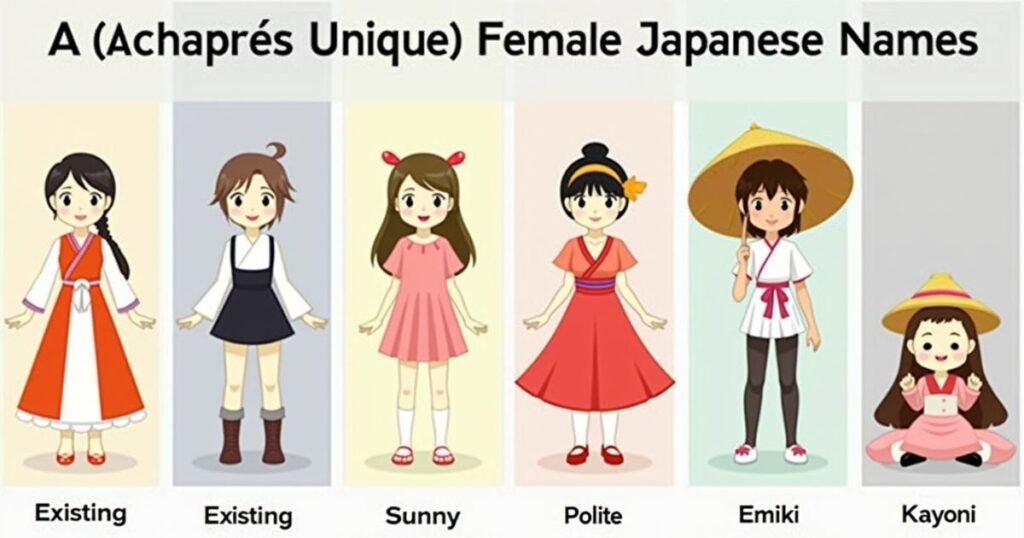
- Arisawa (有沢) – Existing marsh, representing depth and presence
- Hinano (陽菜乃) – Sunny vegetable field, symbolizing warmth and growth
- Meika (芽佳) – Beautiful sprout, representing new beginnings
- Reiko (礼子) – Polite child, embodying grace and respect
- Emiri (恵里) – Blessed village, symbolizing community and fortune
- Hiyono (日陽野) – Sun field, representing brightness and openness
- Kaori (香織) – Fragrant weaving, embodying elegance and artistry
- Nanoka (菜乃花) – Vegetable flower, symbolizing natural beauty
- Rinka (凛花) – Dignified flower, representing strength and grace
- Suzuha (鈴葉) – Bell leaf, evoking gentle sounds of nature
- Kaizuka (海塚) – Ocean mound, symbolizing depth and mystery
- Mizuna (水菜) – Water greens, representing purity and freshness
- Kohana (小花) – Little flower, embodying delicate beauty
- Airin (愛鈴) – Love bell, symbolizing affection and harmony
- Yukina (雪菜) – Snow vegetable, representing winter purity
- Kaede (楓) – Maple, symbolizing autumn beauty and change
- Sena (清奈) – Clear and peaceful, embodying tranquility
- Chikako (智佳子) – Wise excellent child, representing intelligence
- Reina (怜奈) – Wise and graceful, symbolizing elegance
- Natsume (夏芽) – Summer sprout, representing warm growth
- Hinari (陽成) – Sunny achievement, embodying success and brightness
- Ririka (莉里香) – Jasmine village fragrance, symbolizing sweet beauty
- Aihara (愛原) – Love meadow, representing affection and openness
- Nozomi (希美) – Hope and beauty, embodying optimism
- Ichika (一花) – One flower, symbolizing uniqueness
- Suzuna (鈴菜) – Bell vegetable, evoking gentle nature sounds
- Ayaka (彩香) – Colorful fragrance, representing vibrant beauty
- Yuna (優菜) – Gentle vegetable, embodying kindness
- Akiha (秋葉) – Autumn leaf, symbolizing seasonal change
- Haruna (春菜) – Spring vegetable, representing renewal and freshness
- Minori (実里) – Truth village, embodying honesty and community
- Sayaka (清香) – Clear fragrance, symbolizing purity and elegance
- Tsubaki (椿) – Camellia flower, representing refined beauty
Rare Japanese Last Names
- Harukawa (春川) – Spring river, symbolizing renewal and flow
- Takamura (高村) – High village, representing elevation and community
- Shimizu (清水) – Pure water, embodying clarity and freshness
- Fujikawa (藤川) – Wisteria river, symbolizing natural beauty and flow
- Yamashita (山下) – Below the mountain, representing grounded stability
- Akasaka (赤坂) – Red slope, embodying vibrant terrain
- Kurosawa (黒沢) – Black marsh, symbolizing depth and mystery
- Matsuda (松田) – Pine field, representing endurance and nature
- Hoshiyama (星山) – Star mountain, embodying celestial elevation
- Takeuchi (竹内) – Within bamboo, symbolizing flexibility and strength
- Chikamatsu (近松) – Near pine, representing closeness to nature
- Nakamura (中村) – Middle village, embodying central community
- Kurogawa (黒川) – Black river, symbolizing deep flowing waters
- Hayashida (林田) – Forest field, representing abundant nature
- Takizawa (滝沢) – Waterfall marsh, embodying powerful natural beauty
- Inoue (井上) – Above the well, symbolizing elevation and resources
- Nishikawa (西川) – West river, representing directional flow
- Harutake (春竹) – Spring bamboo, embodying renewal and strength
- Kobayashi (小林) – Small forest, symbolizing intimate nature
- Yoshimura (吉村) – Lucky village, representing fortunate community
- Tsunoda (角田) – Corner field, embodying unique positioning
- Shinkawa (新川) – New river, symbolizing fresh beginnings
- Hoshigawa (星川) – Star river, representing celestial flow
- Harada (原田) – Original field, embodying foundational land
- Fujimoto (藤元) – Wisteria origin, symbolizing natural roots
- Hayashi (林) – Forest, representing abundant woodland
- Matsumoto (松本) – Pine origin, embodying enduring roots
- Ueno (上野) – Upper field, symbolizing elevated land
- Koshimizu (小清水) – Small pure water, representing delicate clarity
- Osawa (大沢) – Large marsh, embodying expansive wetlands
- Mizutani (水谷) – Water valley, symbolizing flowing terrain
- Yoshikawa (吉川) – Lucky river, representing fortunate flow
- Minamida (南田) – South field, embodying directional agriculture
Unique Unisex Japanese Names
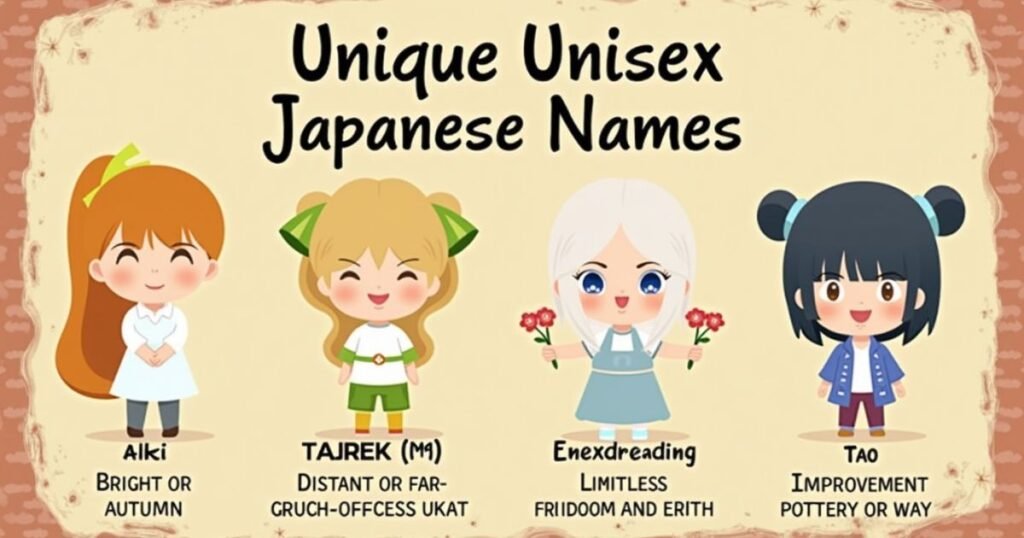
- Aki (旭) – Bright or autumn, symbolizing light and seasonal beauty
- Haruki (陽輝) – Shining sun, representing warmth and radiance
- Haruka (遥) – Distant or far-reaching, embodying vast potential
- Sora (空) – Sky, symbolizing limitless freedom and openness
- Riku (陸) – Land, representing grounded stability and earth
- Kaizen (改善) – Improvement, embodying growth and progress
- Tao (陶) – Pottery or way, symbolizing craftsmanship and path
- Minato (湊) – Harbor, representing safe gathering and community
- Kaito (海翔) – Ocean flight, embodying freedom over vast waters
- Mizu (水) – Water, symbolizing purity and essential flow
- Nari (成) – Become or achieve, representing accomplishment
- Mio (美音) – Beautiful sound, embodying melodic harmony
- Shin (真) – Truth, symbolizing honesty and authenticity
- Niko (日光) – Sunlight, representing warmth and illumination
- Kaze (風) – Wind, embodying natural movement and freedom
- Renji (蓮司) – Lotus director, symbolizing pure leadership
- Mori (森) – Forest, representing abundant woodland nature
- Miki (美希) – Beautiful hope, embodying optimistic beauty
- Aoi (葵) – Hollyhock or blue, symbolizing nature and color
- Takumi (匠) – Artisan, representing skilled craftsmanship
- Kazutora (和虎) – Peaceful tiger, embodying calm strength
- Kaio (海王) – Ocean king, symbolizing powerful waters
- Momo (桃) – Peach, representing sweet natural beauty
- Hina (陽菜) – Sunny vegetable, embodying warmth and growth
- Yuu (勇) – Courage or gentleness, symbolizing brave kindness
- Soji (宗司) – Religious director, representing spiritual leadership
- Azuki (小豆) – Red bean, embodying traditional sweetness
- Issei (一生) – First life, symbolizing new beginnings
- Hosei (邦生) – Country birth, representing national roots
- Sojiro (宗次郎) – Religious second son, embodying spiritual tradition
- Min (湊) – Gather or harbor, symbolizing community connection
- Ren (蓮) – Lotus, representing purity and enlightenment
- Yama (山) – Mountain, embodying strength and elevation
Read This Article: Japanese Names That Mean “Dark” or “Shadow”
Things You Must Know About Rare or Unique Japanese Names
Understanding Japanese naming traditions is essential when choosing a name. In Japanese culture, names carry deep meanings and symbolism connected to nature, virtues, and family heritage. The order of names in Japan differs from Western conventions, with family names coming first followed by given names.
Kanji characters are the foundation of most Japanese names. Each kanji has specific meanings, and the same sound can be written with different kanji, creating entirely different meanings. For example, the name Haruka can be written as 遥 (distant), 春香 (spring fragrance), or 晴香 (clear fragrance). This flexibility allows parents to craft meaningful Japanese names that reflect their hopes for their child.
Japanese name pronunciation can be challenging for non-Japanese speakers. The language uses three writing systems: kanji (Chinese characters), hiragana (phonetic script), and katakana (used for foreign words). Rare Japanese names often feature uncommon kanji readings that even native speakers might not immediately recognize. It’s helpful to provide furigana (hiragana pronunciation guides) alongside complex names.
Choosing a Japanese name for children born outside Japan requires thoughtful consideration. Japanese names for non-Japanese families should be easy to pronounce in both languages and carry positive meanings in both cultures. Many parents select unique Japanese boy names or unique Japanese girl names that work internationally, like Kai, Ren, or Mio.
Japanese nature names remain consistently popular. Names inspired by flowers, seasons, and natural elements reflect the deep cultural appreciation for nature. Japanese flower names like Sakura (cherry blossom), Ayame (iris), and Tsubaki (camellia) are beloved choices. Japanese seasonal names honor the changing year, with spring and autumn names being particularly common.
Gender distinctions in Japanese names are generally clear, though Japanese unisex names exist. Japanese male names often end in sounds like -o, -ta, or -ki, while Japanese female names frequently end in -ko, -mi, or -ka. However, modern Japanese unisex baby names like Haruka, Akira, and Hikari challenge these traditional patterns.
Japanese anime-inspired names have gained global popularity. Characters from anime and manga introduce international audiences to uncommon Japanese names they might not encounter otherwise. While popular Japanese names in the West often come from anime, it’s important to understand the cultural context and proper usage before adopting these names.
Japanese name trends evolve over generations. While traditional names using classic kanji remain timeless, Japanese modern names incorporate newer kanji combinations or simplified characters. Some parents choose Japanese traditional names to honor ancestry, while others prefer contemporary options that reflect current values and aesthetics.
Japanese kanji names require careful selection because the visual appearance matters alongside pronunciation. Some kanji are considered more masculine or feminine based on their meanings and stroke patterns. Rare Japanese boy names might use strong, angular kanji, while rare Japanese girl names often feature softer, flowing characters.
Japanese naming culture emphasizes the weight of choosing a name. Parents consult baby name books, consider the number of brush strokes (for fortune-telling purposes), and ensure the name sounds harmonious. Baby name ideas in Japanese culture often involve extensive research into kanji meanings and historical significance.
Japanese last names tell geographic and occupational stories. Rare Japanese last names like Chikamatsu or Hoshiyama often reference specific locations or natural features. Understanding surname origins helps appreciate the complete identity that Japanese names convey.
Japanese name origins trace back centuries, with influences from Chinese characters and indigenous Japanese words. Historical periods like the Heian era shaped naming conventions still used today. Japanese cultural names preserve this rich linguistic heritage while adapting to modern sensibilities.
Pronunciation guides are invaluable for Japanese names. The name Mizuki (美月) combines “beautiful” and “moon,” while Ayano contains different meanings depending on kanji choice. Japanese names with positive meanings are highly sought after, as parents want their children’s names to be blessings.
Japanese names starting with specific letters hold particular appeal. Japanese names starting with A, K, S, H, M, R, and T represent the most common initial sounds. These letters begin many classic and modern names, offering diverse options for Japanese baby names.
Regional variations exist across Japan, with some names more common in specific areas. Japanese name popularity trends shift between urban and rural communities, and what’s considered rare in Tokyo might be traditional in smaller towns.
When considering Japanese names for boys and girls, remember that the name will shape identity and cultural connection. Whether choosing from unique Japanese names, rare Japanese names, or time-honored classics, understanding the depth of Japanese naming traditions enriches the selection process and honors the beautiful complexity of Japanese language and culture.
FAQ’s
What is the rarest Japanese name?
Determining the absolute rarest Japanese name is challenging, but names like Kaizuka (海塚) meaning “ocean mound” or Chikamatsu (近松) are exceptionally uncommon in modern Japan. Rarity often depends on unusual kanji character combinations rather than pronunciation alone.
What does ayano mean in Japanese?
Ayano (彩乃 or 綾乃) is a beautiful Japanese female name meaning “colorful one” or “of design,” using 彩 (aya) for “color” and 乃 (no) as a possessive particle. It embodies artistic beauty and sophistication.
What does mizuki mean?
Mizuki (美月) is a popular Japanese unisex name meaning “beautiful moon,” combining 美 (mi) for “beauty” and 月 (tsuki) for “moon.” An alternative spelling 瑞希 means “auspicious hope,” both carrying positive and poetic connotations.
What Japanese name means butterfly?
Chō (蝶) directly means “butterfly” in Japanese, while Kochō (胡蝶) is a more elegant variation often used in classical contexts. The name symbolizes transformation, grace, and natural beauty in Japanese naming culture.
Conclusion
Finding the perfect name takes time and thought. These rare Japanese names offer beautiful options for boys, girls, and unisex choices. Each name carries its own story and symbolism. Whether you love Japanese nature names or modern picks, there’s something here for everyone.
Japanese baby names blend tradition with uniqueness perfectly. They work well in Japan and around the world. Meaningful Japanese names give children a special connection to their identity. We hope this list helps you discover a name you truly love.
